

Why B2B and tech have moved on AI faster than most
Two structural reasons. First, the audience is comfortable with the technology — buyers in B2B and tech are not, on the whole, surprised that AI is part of marketing production, and are less likely to react negatively to it. Second, the work itself is well-matched to the technology: B2B brand creative leans heavily on abstract conceptual imagery, atmospheric environmental work, and the kind of "tell the story of what we do" visualization that generative tooling produces cleanly.
The category has also been the most aggressive at restructuring its production around AI. By mid-2025, the brands that have done this well are running materially faster creative cycles than the pre-AI baseline, with the cost reduction reinvested into more creative testing rather than into pure budget reduction.

Where AI fits for B2B and tech brands
- Conceptual and abstract campaign imagery. The atmospheric "what does the future look like" visualization that B2B brand work runs on. The category where generative tooling has the cleanest fit, because the brief is rarely "depict this specific thing" and is usually "evoke this concept."
- ABM and account-targeted creative. Account-based marketing produces the most personalization-dependent creative in the B2B world. Generative tooling lets ABM programs run with higher creative specificity per account than traditional production allowed.
- Event and conference creative. Major B2B brands run dozens of events per year, each with its own creative system. Generation tooling produces the supporting creative — signage, badges, on-stage backgrounds, social companions — at the volume events demand.
- Sales enablement and pitch material. The pitch decks, RFP responses, proposal documents, and sales-floor presentations that B2B teams produce constantly. High volume, lower-stakes, well-suited to generative production.
- Localization for regional sales motions. A core campaign adapted across regional sales motions with environment, talent, and palette changes that maintain brand identity but speak to local context.
Where it does not work yet
- Product UI and interface depiction. Generative tooling does not reliably depict specific software interfaces, dashboards, or product UIs at the accuracy B2B product marketing requires. Product screenshots and demos remain traditionally produced.
- Founder-driven brand storytelling. When the brand voice is the founder, the executive team, or a specific named voice in the category, generative output cannot replace the documentary and interview material that anchors the work.
- Customer-story and case-study photography. Real customers in real environments — the central documentary work of B2B case-study production — still requires the shoot.
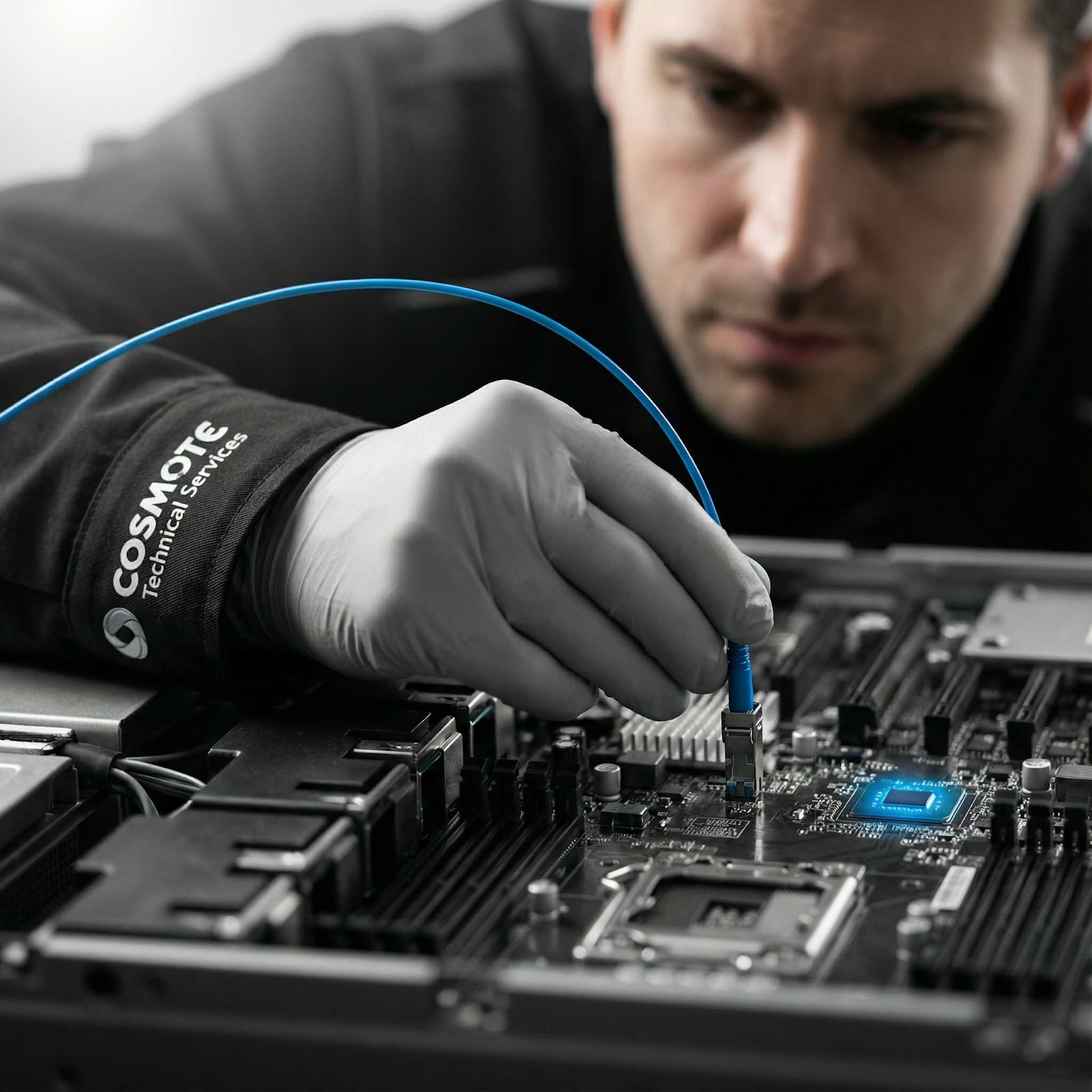
What restructured B2B production looks like
The B2B and tech brands that have done well with generative tooling have settled into a specific working pattern. Hero campaign work, named-executive storytelling, and customer case-study photography remain traditional production. Everything else — the long tail of conceptual imagery, atmospheric work, ABM variants, event creative, sales material — moves into the generative stack.
The cumulative production cost shifts meaningfully. The reinvestment of that cost into more creative testing — more concept rounds per campaign, more variants per audience, faster iteration on what is working — is where the marketing performance improvements actually show up. The brands running the most ambitious AI-creative-driven testing programs in B2B are seeing the biggest performance lift.
Brand consistency across the surface area
B2B brands have an unusually wide creative surface area — multiple product lines, multiple customer segments, multiple verticals, multiple channels, multiple geographies. Brand consistency across this surface is where the production-stack capability matters most. See Brand Consistency Is the Hardest Problem in Generative Creative for the working solutions.